
September 15, 2026
How Long Does It Take to Build a Custom Home in Michigan?
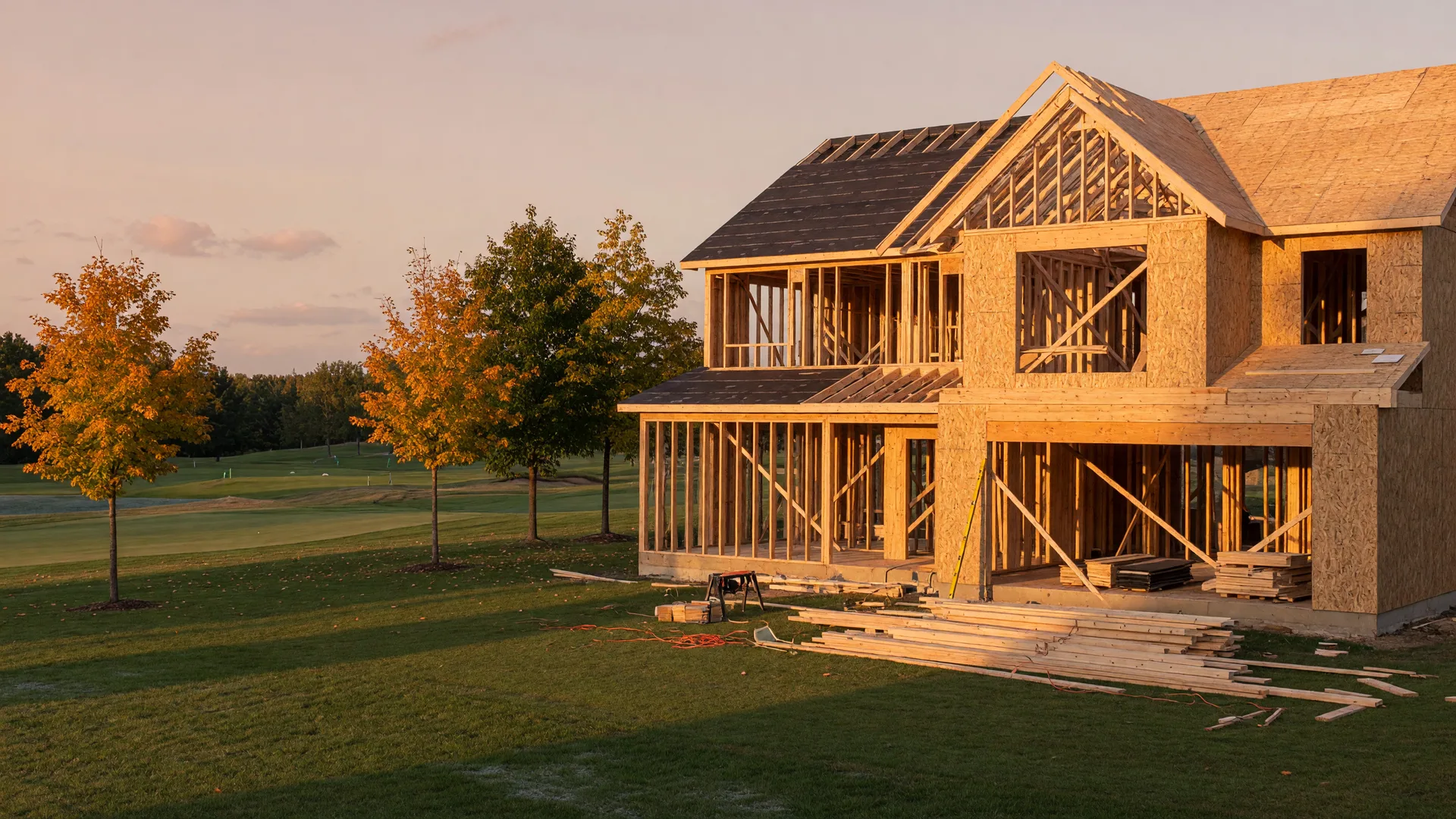
If there is one question I hear more often than any other from buyers in Fenton, Linden, Tyrone Township, and across Mid-Michigan, it is this: how long does it take to build a custom home? It usually arrives with a second part attached, like whether the family will be moved in before school starts, before the holidays, or before a lease runs out. It is a fair question, and the honest answer comes in two pieces.
Here is the short version. For a custom home in Michigan, plan on roughly nine to twelve months for the construction phase once the site work begins, and twelve to twenty-four months when you include design, homesite selection, and all the decisions that happen before the first shovel hits the dirt. The most recent U.S. Census Bureau survey of new single-family construction puts the average build at about eight months of construction after permits, with roughly a month and a half of permitting on top. Custom builders commonly quote nine to twelve months for the build itself, and that range holds up well for the homes we build at Fairways of Spring Meadows and The Oaks of Tyrone.
Two Timelines, Not One
The part most buyers overlook is that the clock does not start at groundbreaking. Before the first footer is poured, a custom home needs a homesite, a floor plan that fits it, engineered drawings, permits, and a full list of selections: cabinetry, flooring, countertops, paint colors, lighting, and fixtures. For a truly custom build, that pre-construction phase can take four to six months or longer, and it is entirely in your control. The more decisions you bring to the table, the faster the run-up goes.
I always tell buyers to think of the process as two timelines running in sequence: the planning timeline and the construction timeline. When someone asks me "how long does it take to build a custom home in Michigan," they usually mean the construction timeline, and they are usually surprised at how much time they forgot to budget on the front end.
Inside the Construction Phase
Once construction begins, a typical custom home moves through a familiar sequence: site work and the foundation, framing and the dry-in, rough mechanicals, insulation and drywall, and then the finish trades, which include trim, cabinetry, flooring, paint, and final fixtures. Each stage depends on the one before it, which is why an interruption anywhere in the chain tends to echo through everything that follows.
The finished-home milestone most people care about is "dried in," the point when the roof, windows, and exterior walls are sealed against the weather. After that, the most weather-sensitive work is behind us, and the interior trades can keep moving through any Michigan season. That is the milestone a good builder schedules around first.
What Really Moves the Schedule
In my experience, five factors push custom-home schedules around, and only one of them is the weather.
Weather. Rain, snow, freezing temperatures, and high winds matter most during site work, foundation pours, and exterior work. In a seasonal climate like ours, weather can add anywhere from two to eight weeks across an entire build. A builder who does not plan for it is handing you a fantasy schedule.
Permits and inspections. Municipal backlogs vary, and a stalled inspection can idle a crew for days. Ask what the current wait looks like in the township where you plan to build; it is a legitimate schedule question, not a nitpick.
Selections and change orders. The biggest cause of delay on a custom build is often the buyer, not the wind. Every fixture, countertop, and cabinet with a long lead time becomes a schedule risk if it is chosen late, and every mid-build change is a ripple through multiple trades.
Trade availability. Good framers, electricians, and finish carpenters book out weeks in advance. A builder with long-standing relationships and a steady pipeline of work keeps crews moving from one stage to the next instead of waiting for openings.
Site complexity. A wooded lot with mature trees, a slope with walkout potential, or drainage that needs engineering all add days or weeks. That is the tradeoff buyers accept when they choose a lot with real character, and it is usually worth it.
Michigan's Weather Is Part of the Math
I would not be honest if I pretended our four seasons have no effect on a schedule. A fall start usually means racing the freeze to get foundation work in, while a spring groundbreak tends to give site work the most cooperative three or four months of the year. That said, homes are built in Michigan through the winter every year, including at our communities. Construction does not stop when the snow flies; the work just gets protected and sequenced differently, and a realistic calendar accounts for it.
If you are weighing a fall or winter start, I wrote a separate post on what actually happens on a Michigan jobsite in cold weather, including how foundations are protected and what questions to ask a builder before committing to a winter schedule. It pairs well with this one if you are making a decision this season.
What You Control as the Buyer
A custom build is a partnership, and the buyer's side of the ledger matters. Here is the checklist I share with families who want their schedule to hold up. Lock your financing early so the project never waits on paperwork. Choose a builder with a documented process and established trade relationships rather than someone assembling a crew fresh. Commit to selections in the first weeks of the build, and resist the urge to change them later. Choose a homesite that fits the plan you love instead of forcing a plan onto a lot that fights it. And ask, directly, how much weather buffer is baked into the schedule. A straight answer on that last one tells you a lot about how the whole project will run.
What This Means for Big Sky Development Buyers
At Big Sky Development, we build a limited number of homes at a time in each community, which keeps our crews, suppliers, and trade partners focused on a small set of projects rather than stretched across a city. At Fairways of Spring Meadows in Linden, buyers can tour the model home at 5483 Championship Drive, and depending on the stage of construction, some homes can be personalized while they are being built, which is one way to shorten what feels like a long process. Occasional spec homes can shorten the timeline further; contact Rob for current availability.
At The Oaks of Tyrone in Tyrone Township, the one-acre wooded homesites are the draw, and those lots carry their own schedule considerations, like clearing, drainage, and walkout grading. The tradeoff is privacy and mature trees you cannot buy later. Whatever community fits your family, the best first step is the same: walk a finished home, meet the team, and ask the timeline questions above in person.
Frequently Asked Questions
How long does it take to build a custom home in Michigan?
Plan on roughly nine to twelve months for construction after site work begins, and twelve to twenty-four months total when you include design, homesite selection, planning, and permits. Every home is different, so ask your builder for a schedule written around your specific plan and lot.
Can Michigan weather really add months to a build?
It can add weeks, and occasionally more, during site work, foundation pours, and exterior work. Rain, snow, and freezing temperatures are the biggest seasonal factors. A good builder plans the calendar around them, and a realistic schedule is better than a heroic one.
What takes longer, the design or the construction?
Many buyers are surprised that planning, permits, and selections can take as long as construction or longer, especially for a fully custom home. Making your selections early is the single easiest way to protect your overall timeline.
Is there a faster way to get a new construction home?
Sometimes. Homes already in construction may be open to buyer selections depending on the stage, and occasional spec homes are move-in ready sooner. Ask Rob Moen about current availability at Fairways of Spring Meadows and The Oaks of Tyrone, since inventory changes.
When should we start if we want to move in by next summer?
For a custom build, starting the planning conversation this fall and aiming for a coordinated site start is realistic, but every plan and lot is different. Ask for a community-specific schedule during your model home tour rather than relying on a national average.
Walk the standard before you start the clock
The best way to understand a custom-home timeline is to see real finishes and talk through a real plan. Tour the Big Sky Development model home at 5483 Championship Drive in Linden, and bring your calendar questions. Open house hours are posted on the site; call to confirm the most current schedule.
If you are considering building a custom home in Fenton, Linden, Tyrone Township, or elsewhere in Mid-Michigan, I would be happy to answer your questions and help you understand your options, from floor plans and homesites to a realistic schedule for your family. Visit one of our upcoming open houses, tour the Big Sky Development model home, or call or text me, Rob Moen, at 810-691-0019. You can also learn more at BigSkyDev.com.
Timeline figures are general industry ranges; every custom home is different, and schedules fluctuate with weather, permits, materials, and site conditions. The model home and sales center is located at 5483 Championship Drive, Linden, MI 48451. Rob Moen, Principal Broker, Keller Williams First, License #6502408709. See the builder for complete details.