
September 15, 2026
Can You Build a Custom Home in Winter in Michigan?
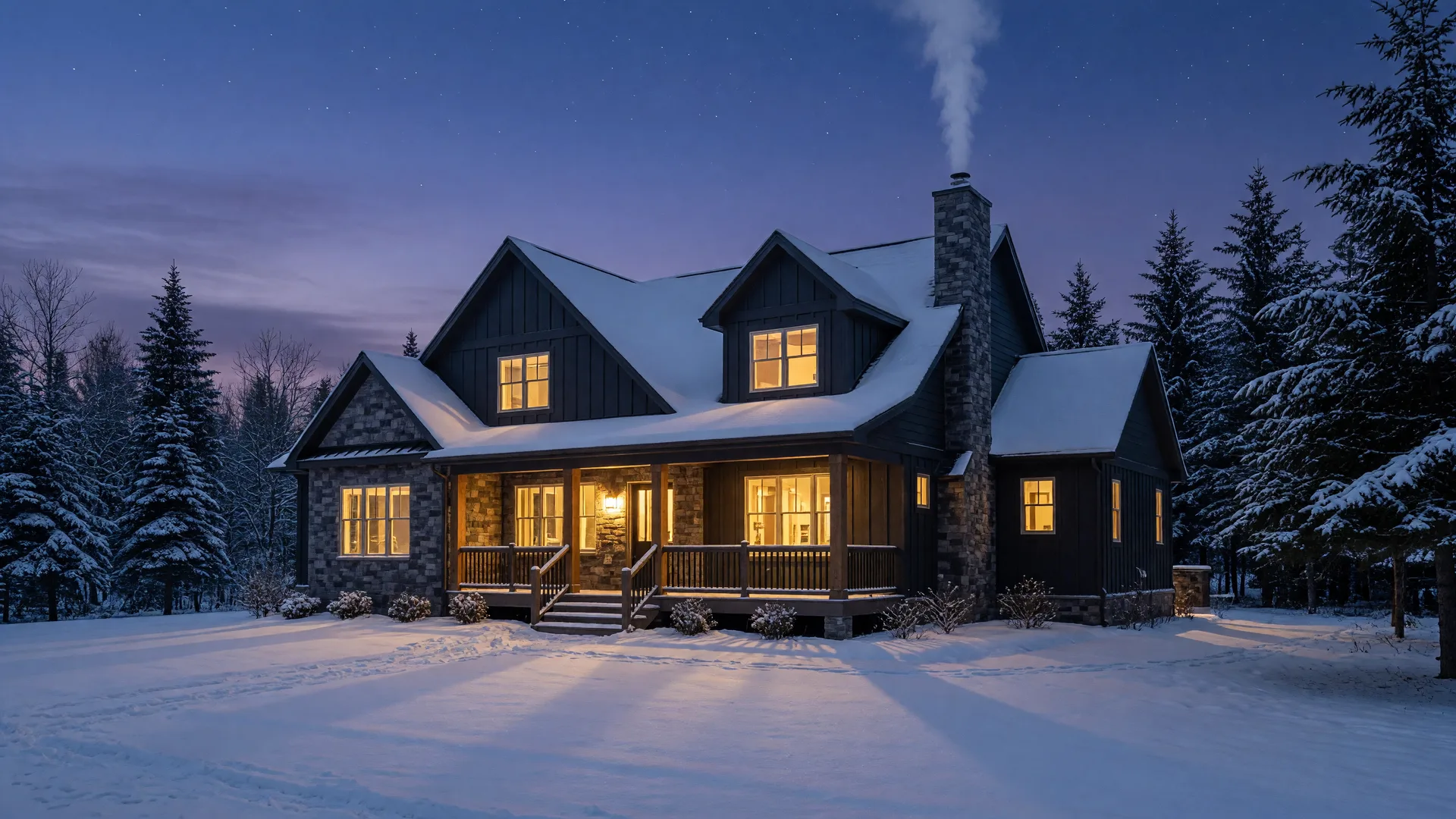
It is mid-September, and the buyers I meet in Fenton, Linden, and Tyrone Township are asking the same question families ask every fall: if we sign now, will our custom home really get built through the winter? There is a widespread assumption that new-construction work in Michigan shuts down when the snow flies, and plenty of buyers quietly write off another year because of it. I would like to clear that up, because the answer changes the math for a lot of families.
The short answer is yes. Homes are built in Michigan all winter long. What changes in cold weather is not whether construction happens, but how carefully the builder protects the work and how honestly they plan the calendar. Concrete work gets the most attention, and it deserves it: ice inside fresh concrete can permanently weaken a foundation in ways you may not see for years. That is why cold-weather construction is a discipline, not a gamble.
The Concrete Question Comes First
Concrete is the work that worries builders in a Michigan winter, and the industry has a standard for it. The American Concrete Institute defines cold weather as an average daily air temperature below 40 degrees Fahrenheit for three consecutive days, and once that threshold is hit, a different set of rules takes over. Fresh concrete must reach roughly 500 pounds per square inch of strength before it can be allowed to freeze, which typically means about 48 hours of protection. If it freezes earlier, the ice expansion can permanently cut the concrete's strength, in some cases by up to half. Fresh concrete itself freezes around 27 degrees, so even a mild "cold snap" is a real threat.
A builder who pours in winter heats the mixing water and aggregates, adds accelerating admixtures to speed the cure, and specifies air-entrained concrete, which is required in Michigan for concrete exposed to freeze-thaw cycles. Then they protect the pour with insulated blankets, heated enclosures, and temperature monitoring until it reaches strength. It is not guesswork; it is a documented process with the same goal as a summer pour: a foundation that performs for decades.
What a Builder Does to Protect Your Foundation
In Michigan, footings are set roughly 42 inches below finished grade so they sit below the frost line, and that depth is part of why the foundation is the most weather-sensitive stage of a winter build. Frozen subgrade is a problem too: if concrete is poured over frozen ground, the soil can heave as it thaws and shift the footing. Builders remove all frost from the excavation before forming, keep the subgrade warm and dry, and time pours for the warmest part of a winter day whenever possible.
This is the stage where an experienced Midwest builder earns their fee. A crew that has poured foundations through northern Michigan winters knows exactly when conditions are safe and when no amount of blankets will make up for a bad day. If you are starting a custom home in the fall, asking how the builder handles cold-weather concrete is not a technical question; it is a home-and-family question.
The Work That Thrives in Winter
Here is the part most people do not expect. Once a home is dried in, meaning the roof, windows, exterior walls, and doors seal out the weather, a Michigan winter is a perfectly fine time to build. Framing can continue as long as the work is protected, and the mechanical trades, plumbing, electrical, and HVAC, plus insulation, drywall, paint, trim, cabinetry, and flooring, all happen indoors. That finish work is the largest stretch of a build in calendar terms, and it does not care what the thermometer says outside.
In fact, a winter interior schedule has a quiet advantage: once the heat is on, finishes cure and install the way they should, and there is no summer humidity rushing the paint and flooring. Many of our most finished, best-looking homes at Fairways of Spring Meadows and The Oaks of Tyrone have done their interior work between Thanksgiving and spring.
The Honest Tradeoffs of a Winter Build
I would not be doing my job if I only listed the sunny side. Winter construction has real tradeoffs, and a good builder will tell you about them before you sign. Frozen ground makes excavation slower and harder, and frost must be cleared from every trench. Daylight is short, which compresses the usable hours on exterior work. Roofing, siding, masonry, and some exterior finishes are picky about temperature and may pause during deep freezes. And a stretch of weather that prevents outside work moves the calendar, full stop.
None of this means winter building is a bad idea. It means the schedule needs a weather buffer built into it, which is exactly what a realistic builder does. When a contractor quotes you a timeline for a fall or winter start and it has zero margin for snow, be suspicious. When they hand you a schedule with protected pours, dried-in milestones, and a winter buffer, they are showing you how the work is actually going to happen.
Questions to Ask Before a Fall or Winter Start
If you are leaning toward starting this fall, or even already signed, these are the five questions I would put to any custom builder in Mid-Michigan. First, does your schedule assume winter weather, and how many weeks of buffer are in it? Second, what is your cold-weather concrete protocol, and who is responsible for temperature monitoring? Third, when do you expect this home to be dried in, and what happens to exterior work after that point? Fourth, how do you handle roofing, siding, and masonry when temperatures drop below their working range? And fifth, what has actually gone wrong on past winter builds, and what did you change because of it? The last question tells you more than the first four, honestly.
A Fall Decision With a Spring Payoff
For buyers at Big Sky Development, fall is one of the most productive times of year to start the conversation. A coordinated fall start can get site work and foundations done before the ground freezes hard, then let the interior trades run through the winter so spring finds a dried-in, insulation-ready home instead of an empty lot. Or you may prefer a spring groundbreak; both are legitimate, and the right answer depends on your family, your floor plan, and the availability at the community you choose. Homes at Fairways of Spring Meadows in Linden can sometimes be personalized while they are in construction, and occasional spec homes can shorten the timeline. For current homesites and construction schedules, contact Rob rather than relying on what you read online.
The best way to see how a Michigan-built home handles its first winter is to walk one that has already done it. The Big Sky Development model home at 5483 Championship Drive in Linden is a finished example of the quality, insulation, and finish detail that carry a family through January in comfort.
Frequently Asked Questions
Can concrete really be poured in a Michigan winter?
Yes, when a builder follows cold-weather concrete standards: heated mix water and aggregates, accelerating admixtures, and insulated blankets or enclosures until the concrete reaches about 500 psi of strength, usually within 48 hours. Michigan footings are also set about 42 inches deep, below the frost line.
Is it more expensive to build in winter?
Cold-weather measures, heating, added labor, and weather pauses can add cost compared with a summer build. A trustworthy builder builds those realities into the quote and schedule up front, so there are no surprises in January.
What does "dried in" mean?
It means the roof, exterior walls, windows, and doors are in place and seal out the weather. After that milestone, the remaining work is mostly interior trades, which proceed year-round regardless of snowfall.
Should we just wait until spring to start?
Not necessarily. A fall or winter start can get foundations in before the hard freeze and let interior work run through the winter, while a spring start gives site work the most cooperative weather. Talk through your timeline and goals with the builder, and compare current availability at the communities you are considering.
See what a Michigan-built home feels like
Tour the Big Sky Development model home at 5483 Championship Drive in Linden and feel the insulation, finish quality, and comfort that carry families through a Mid-Michigan winter. Open house hours are posted on the site; call to confirm the most current schedule before you visit.
If you are considering building a custom home in Fenton, Linden, Tyrone Township, or elsewhere in Mid-Michigan, I would be happy to answer your questions and help you understand your options, including whether a fall or winter start fits your family. Visit one of our upcoming open houses, tour the Big Sky Development model home, or call or text me, Rob Moen, at 810-691-0019. You can also learn more at BigSkyDev.com.
Cold-weather construction guidance here reflects general industry practice; always confirm the builder's specific methods and your project's schedule directly. The model home and sales center is located at 5483 Championship Drive, Linden, MI 48451. Rob Moen, Principal Broker, Keller Williams First, License #6502408709. See the builder for complete details.