
September 22, 2026
Custom Home Construction Loans in Michigan: How They Work
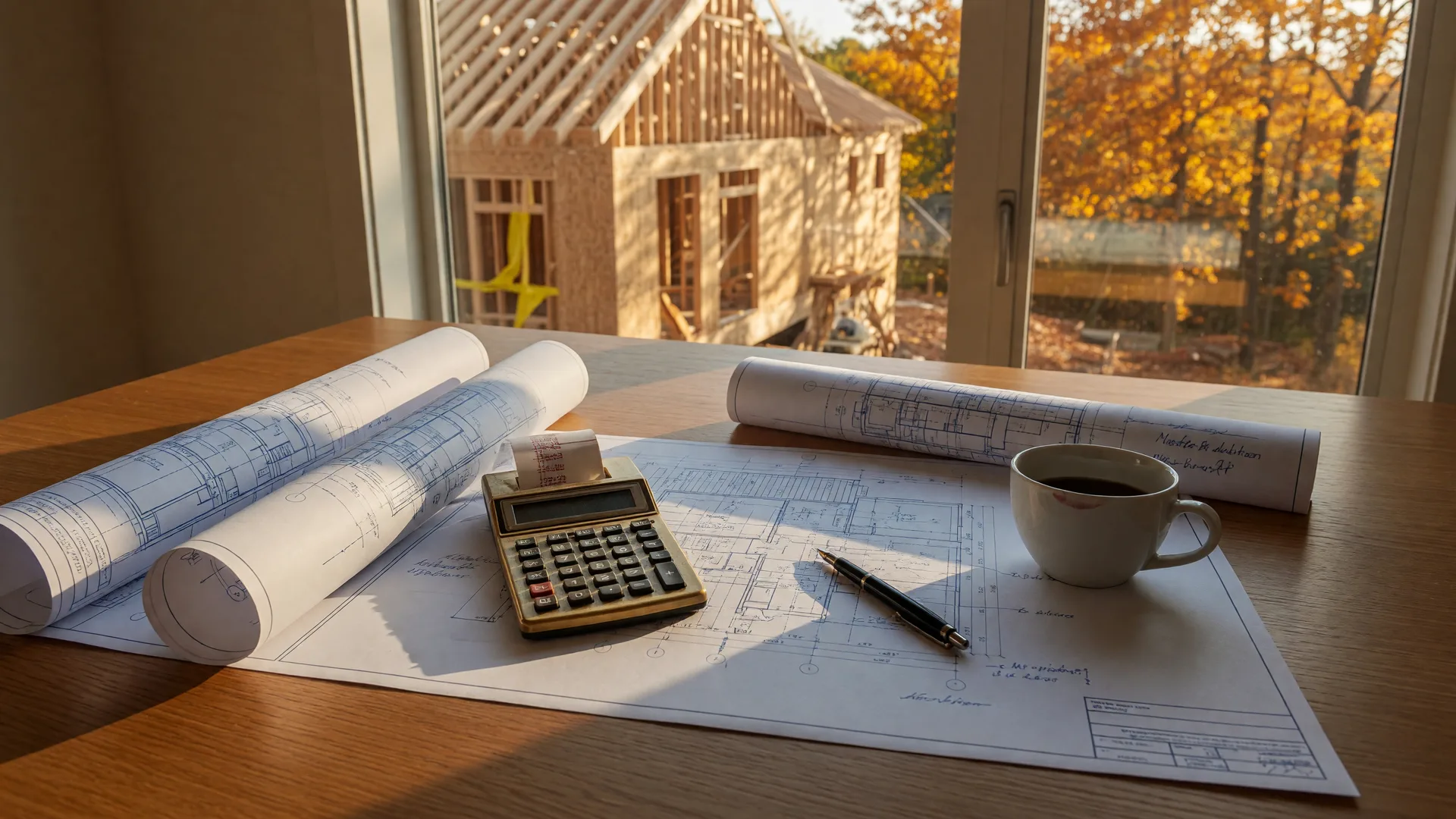
If you are shopping for a custom home in Fenton, Linden, Tyrone Township, or elsewhere in Mid-Michigan, there is a moment when the conversation shifts from floor plans and homesites to a harder question: how do you actually pay for a house that does not exist yet? You cannot drive by an empty lot and get a traditional purchase mortgage for it, and that surprises a lot of first-time builders. The good news is that a construction loan for a custom home in Michigan is a well-established product, and once you understand how it works, it stops feeling mysterious.
Here is the short version. Most custom builds are financed with a construction-to-permanent loan, sometimes called a single-close loan. You close once, the lender releases money in stages as your builder hits construction milestones, you pay interest only on the amount actually drawn while the home is being built, and when construction finishes, the loan converts into a regular mortgage. In general, lenders expect a down payment in the 20 to 25 percent range of the total project cost for a custom build, though programs and credit profiles vary widely, so the number that matters is the one your lender quotes for your situation.
Two Ways to Finance a Build: One Close or Two
There are two main routes, and naming them helps when you talk to lenders. The construction-to-permanent loan bundles everything into one closing: the construction loan and the permanent mortgage are approved together, you close once, and at the end of the build the loan simply rolls over into your monthly mortgage. This avoids a second closing, a second set of lender fees, and a second underwriting process.
The other route is a construction-only loan, where you borrow the build cost, then apply separately for a mortgage once the home is complete. That means two closings, two sets of fees, and the risk that mortgage rates move between the start of construction and the end. There are situations where a two-close approach makes sense, such as a buyer who wants to shop the permanent loan at the end, but for most families the single-close construction-to-permanent loan is the cleaner path, and it is the one our buyers ask about most often.
How Draws Work: Funds Arrive With Milestones
Money is not handed over in one lump sum. Instead, the lender releases funds in stages, called draws, tied to construction milestones: the foundation and site work, framing, the dry-in, rough plumbing, electrical and HVAC, then interior finishes, and finally the completed home at certificate of occupancy. Before most draws are released, a lender-appointed inspector visits the site to verify the work is actually done. This protects everyone: the bank is never exposed beyond the value of the work in place, and you are not paying ahead for work that has not happened.
For the buyer, the practical effect is a predictable rhythm. As each phase of the build is verified, funds flow to the builder, often within a few business days, and construction keeps moving. A builder who is used to this system coordinates the calendar around inspections, because a stalled draw is a stalled job site. When you tour our model home at 5483 Championship Drive, ask about how draws and inspections are scheduled for homes in the community; a good builder talks about this process openly.
Interest During Construction: Only on What You Draw
One of the most pleasant surprises about a construction loan is how interest works during the build. You are not charged interest on the entire loan amount from day one. You pay interest only on the money actually drawn to date, so your monthly interest-only payment starts small with the first draws and grows as the build progresses. Many lenders also set up an interest reserve account at closing, essentially a small fund that automatically covers these interest payments during construction, which is convenient for budgeting.
Construction-phase interest rates generally price above a standard purchase mortgage, and the permanent rate, once the loan converts, resets to a standard fixed mortgage rate. This is territory where I deliberately stay out of specifics, because rates move, programs change, and the only number that matters is the written quote from a lender. What I can tell you from two decades in this business is that a local lender with new-construction experience is worth finding early, because the paperwork on a custom build has quirks a typical purchase loan originator rarely sees.
What Lenders Want to See for a Custom Build
The underwriting picture for a custom home is a little different from a resale purchase, and knowing the checklist helps you prepare. Lenders review your credit profile and debt-to-income ratio, the appraised value of the finished home based on the plans and specs, and the contract with the builder, including the projected budget and completion date. They also underwrite the builder: a licensed, insured builder with a track record of completed projects and a stable financial picture is easier to finance than one with a thin history. This is one quiet way a long-established builder like Big Sky Development earns its keep, because lenders recognize the name and the portfolio.
Two assets can work in your favor if you have them. If you already own the land you plan to build on, its value can often be applied toward your down payment, which lowers the cash you need to bring to closing. And if you are selling a current home, the equity from that sale can serve the same role, though lenders treat these differently depending on the program, so it is worth asking specifically how land and equity are counted.
The Right Time to Start Is Earlier Than You Think
In my experience, the buyer mistake that costs the most time is waiting to talk to a lender until after they have fallen in love with a floor plan. Financing quietly shapes the entire schedule of a build, the down payment you can make, the price range of the homesite you can consider, and how much flexibility you have on selections. Getting pre-qualified before you sign anything costs an afternoon and removes a whole category of stress later. It also positions you to move fast if a homesite you love becomes available.
This connects directly to the overall custom-home timeline I wrote about earlier: planning time, including financing, belongs on the front end of the calendar, not squeezed in alongside selections and permits. The families whose builds run smoothest are the ones who brought their pre-approval to the first design conversation.
What This Looks Like at Big Sky Development
At Fairways of Spring Meadows in Linden and The Oaks of Tyrone in Tyrone Township, the financing conversation starts the same way for every family: with a tour of the model home at 5483 Championship Drive. Walking the real finishes makes the numbers feel concrete. From there, we can connect you with lenders who regularly finance new construction in these communities and understand the local appraisal and inspection environment, and we can walk you through what to expect at each stage of the build so nothing surprises you on the financial side.
A few honest notes as you get started. I am a real estate broker, not a lender, so please treat everything above as orientation, not advice, and have any loan program reviewed in writing before you commit. Availability, pricing, and builder incentives change, so contact Rob for current availability and pricing. The structure of a construction loan is a tool, and like any tool, it works best when you understand it before you need it.
Frequently Asked Questions
What is the difference between a construction loan and a construction-to-permanent loan?
A construction-only loan covers the build and ends when the home is finished, at which point you apply for a separate mortgage. A construction-to-permanent loan is one closing: the construction financing converts into your permanent mortgage when the build completes, with fewer fees and one underwriting process.
How much down payment do I need for a custom home construction loan in Michigan?
Lenders generally look for 20 to 25 percent of the total project cost for a custom build, though conventional programs can accept less depending on your credit and debt-to-income profile. If you already own the land, its value may be applied toward the down payment. Ask your lender for program-specific numbers.
When do I get the loan money, and who checks the work?
Funds are released in draws tied to construction milestones, such as foundation, framing, dry-in, rough mechanicals, and finishes. A lender-appointed inspector verifies each milestone before the draw is released, so you pay for work that is genuinely in place.
Do I make payments during construction?
Yes, but only on the amount actually drawn, so payments grow as the build progresses, and many lenders fund an interest reserve that covers them. Once the home is complete, the loan converts and you begin normal principal-and-interest mortgage payments.
When should I talk to a lender about building a custom home?
Early, ideally before you sign a contract or reserve a homesite. Pre-qualifying first tells you your realistic price range, shapes your homesite choices, and lets you move quickly when the right opportunity appears. Lenders with new-construction experience are especially valuable for custom builds.
Bring your financing questions to the model home
A construction loan makes a lot more sense when you can see the finishes and walk the community the loan is for. Tour the Big Sky Development model home at 5483 Championship Drive in Linden, and bring your financing questions. Open house hours are posted on the site; call to confirm the most current schedule.
If you are considering building a custom home in Fenton, Linden, Tyrone Township, or elsewhere in Mid-Michigan, I would be happy to answer your questions and help you understand your options, including how construction financing fits into a realistic plan for your family. Visit one of our upcoming open houses, tour the Big Sky Development model home, or call or text me, Rob Moen, at 810-691-0019. You can also learn more at BigSkyDev.com.
Financing details are general orientation, not lending advice. Loan programs, down payment requirements, rates, and terms vary by lender and change over time; have every program reviewed in writing by a qualified lender. The model home and sales center is located at 5483 Championship Drive, Linden, MI 48451. Rob Moen, Principal Broker, Keller Williams First, License #6502408709. See the builder for complete details.