
September 22, 2026
Your First Heating Season in a New Michigan Home: What to Expect
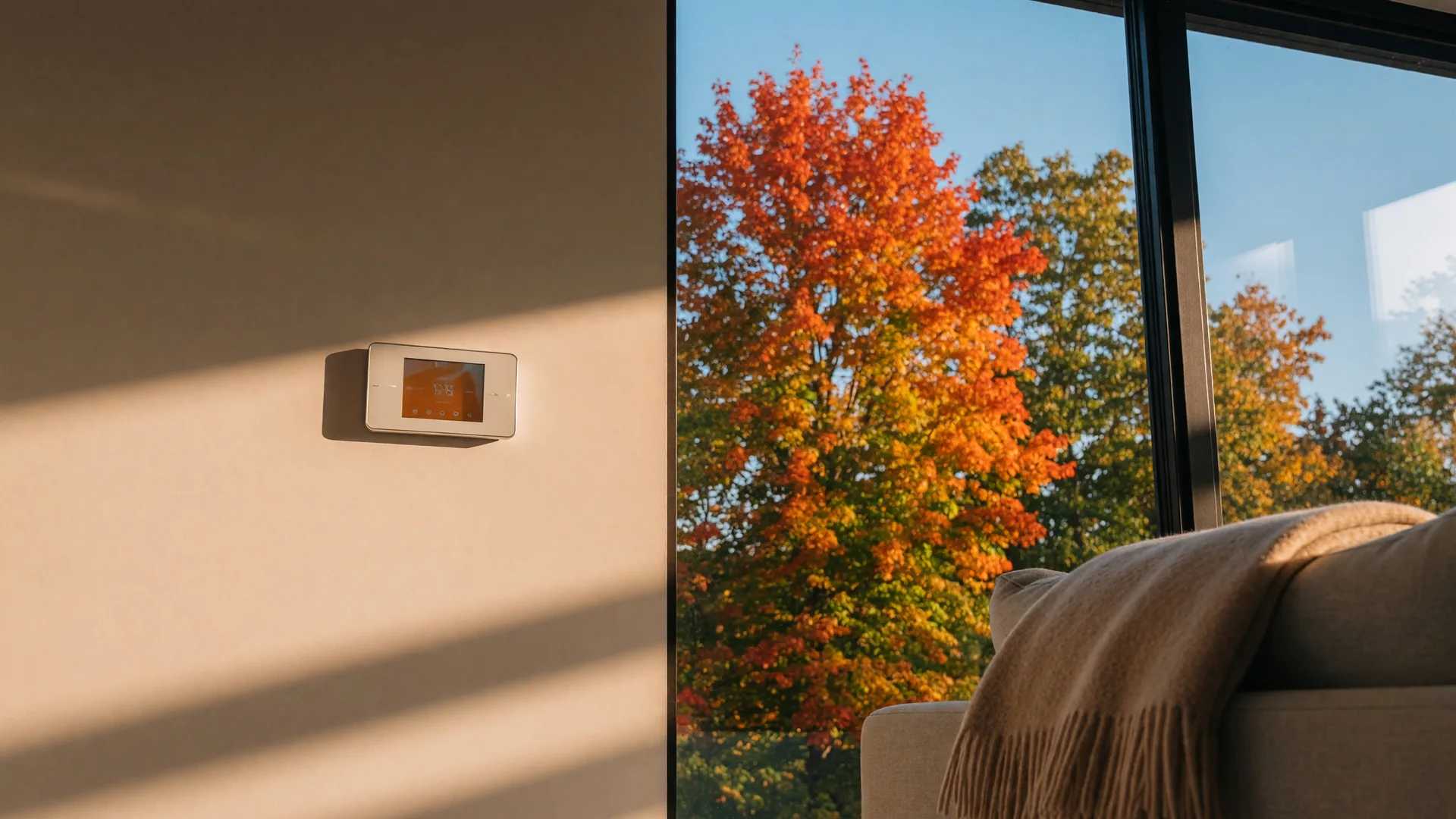
If you closed on a new construction home anywhere near Linden, Fenton, or Tyrone Township this year, this is the season your furnace has been waiting for. All summer it sat silent while you unpacked and the yard went in. Now the maples are turning, the nights have teeth in them, and sometime in the next few weeks you will walk past the thermostat and realize the heat is about to run for real, for the first time, in a house that has never been through a Michigan winter.
Here is the short answer to what to expect. Your first heating season in a new Michigan home is a settling-in period, not a crisis. Change or check the furnace filter before you run the heat, bring the thermostat up gradually from a modest setpoint, keep the temperature around 68 degrees while you are home and a few degrees lower at night, aim for indoor humidity in the 30 to 40 percent range, and expect a few nail pops and hairline cracks as the house cures. None of that means something is broken. What it means is that a brand-new house is doing exactly what a brand-new house does.
Why Year One Is Different From Every Year After
New construction releases a surprising amount of moisture in its first year. Concrete foundations and slabs, drywall, freshly milled lumber, and new finishes all give off water as they cure, which is why a new home can feel humid in the fall even as the outdoor air turns dry. This changes the two things you manage most in winter: temperature and humidity. Get the humidity wrong in year one and you can crack hardwood, pop trim, or grow condensation on windows, none of which you want to be dealing with while you are still making the place feel like home.
The practical takeaway is that year one is when your attention to the heating system pays off the most. In an energy-efficient new home, the structure does most of the work, but the furnace, the humidifier, and the filters still need a little coaching to do their part.
Set the Thermostat the Michigan Way
Energy and HVAC professionals, including DTE, Michigan's largest energy utility, point to the same basic guidance: set the thermostat around 68 degrees while you are awake at home, and drop it a few degrees while you sleep or while the house is empty. The U.S. Department of Energy has long suggested that an eight-hour nightly setback of 7 to 10 degrees can trim a home's heating bill by as much as 10 percent over a season, which is worth more than the badge on a thermostat. Most Michigan homeowners I know run 66 to 68 by day and a few degrees cooler at night, and they are comfortable.
One number to treat as a floor: do not let the heat fall below 55 degrees when the house is empty, especially in winter. That is the line plumbing and HVAC pros draw to keep pipes from freezing. If you are away for the holidays, 60 is safer than aggressive, and a smart thermostat that can drop the temperature while you are gone and warm the house before you return gives you both comfort and economy without the worry.
Ease Into the First Heat
The first fire-up deserves a little ceremony. Start with the basics: check the furnace filter and replace it if it is dusty, confirm the humidifier pad is clean and sized right, and make sure every supply vent and return register is open and unblocked by furniture, rugs, or boxes you have not unpacked yet. Then set the thermostat a few degrees above room temperature and let the system run, raising the setpoint gradually over a day or two rather than blasting it. This gentle ramp gives the ductwork, the finishes, and the whole house time to warm evenly, and it tells you whether air is moving everywhere it should.
While you are at it, test your carbon monoxide detectors with fresh batteries. Every year, CO incidents climb right as furnaces come out of their summer sleep, and a year-old ducted furnace with a failing alarm is not the memory you want. This is also a fine time to confirm the fan switch on the thermostat works and to set a filter-change reminder. On a newer home, filters are usually engineered to be simple to swap; set a calendar reminder and make it a habit. A quarterly or manufacturer-guided interval beats checking three times a year and forgetting.
Get Winter Humidity Right
If you have a whole-house humidifier attached to the furnace, here is the Michigan guidance HVAC pros give. Aim for roughly 40 to 50 percent relative humidity when outdoor temperatures stay above 40 degrees, taper to 35 to 40 percent in the 30s, 30 to 35 percent in the 20s, and settle near 30 percent or below in the teens and single digits. In plain terms, run the humidistat around 30 to 40 percent for most of a Michigan winter, and turn it down as the mercury drops. The exact dial moves with the outdoor temperature because cold windows condense moisture; too much humidity on a very cold night means frost on the glass and damp window sills by morning.
New hardwood floors, wide-plank trim, and fine cabinetry, the things buyers in our communities point to first, are exactly what dry winter air attacks. Too-dry air pulls moisture out of wood and it shrinks, creeks, and cracks. A humidifier in the 30 to 40 percent range keeps that from happening while staying well short of the condensation zone. If you do not have a whole-house humidifier, a quality room humidifier in the main living area is a reasonable alternative, and it is one of the cheaper insurance policies you will buy for hardwood.
The Settling You Should Expect
Somewhere around the first really cold stretch, you will find a nail pop in a wall, a hairline crack at a drywall seam, or a sliver of gap where a door casing meets the plaster. This is normal. New houses settle, wood dries and moves, and drywall does what drywall does in its first heating season, which is develop tiny cosmetic stress marks. Almost all of it is invisible at eye level and harmless structurally.
What matters is what you do next. Do not patch everything in December for the pleasure of repainting in March. Instead, make a simple list with photos as you notice things through the fall and winter, note which rooms and which walls, and raise them with your builder before the first-year warranty window closes. This is exactly the kind of conversation we welcome at Big Sky Development: a buyer who watches their home closely and shares what they see. My honest guidance is to save the spackle for spring and let the house finish settling before you touch a single seam.
Use the First Winter as Information
There is a professional habit I lean on after two decades in this business: treat the first winter as a diagnostic test the house is taking. When a cold snap settles in, walk each room once, feel the air near windows and exterior doors, and listen for whistles. A newer home with modern windows, insulation, and a tight envelope should feel noticeably even, but the goal is to know precisely where the house is comfortable and where it is merely fine, so you can tell the builder exactly what you observe. If the furnace runs unevenly, cycles constantly, or a room stays cold no matter the setting, say so. That is how small issues get fixed on the builder's side of the ledger rather than discovered by the next owner.
And if you are building rather than already living in the home, the same logic applies in reverse. A winter walk of a finished Big Sky model is one of the most useful tours you can take, because it shows you how a properly built home holds heat, drains, and feels when the leaves are down and the ground is frozen. That is a perspective summer buyers never get. Plan ahead by taking a look at our fall maintenance checklist too, so the furnace, gutters, and exterior are squared away before the freeze.
A Fall Day Worth Taking
If your heating season is in good order, reward yourself with the best part of Michigan autumn. Late September and October are peak color and cider season in this corner of Genesee County. Diehl's Orchard and Cider Mill in nearby Holly, about ten miles from Linden, is a reliable family tradition through October 31, with fresh-pressed cider, hot donuts, and a corn maze. It makes a fine Saturday: tour the Big Sky model home at 5483 Championship Drive on a weekend afternoon, then take the short drive for donuts and pumpkins while the color is at its best. Fall around here is a feature of living in a place like Fairways of Spring Meadows, not a footnote.
Frequently Asked Questions
What temperature should I set my thermostat to in a Michigan winter?
Around 68 degrees while you are awake at home, and a few degrees lower while you sleep or when the house is empty. Avoid letting it drop below 55 degrees when you are away, which is the general line where pipes are at risk of freezing.
Why is my new home humid in fall but dry in winter?
Fresh concrete, drywall, and lumber release moisture during their first year, which raises humidity in fall. As winter progresses, cold dry air outside and steady heat inside pull that moisture out, so you transition to managing dry air with a humidifier.
Do I really need a furnace tune-up in year one?
New equipment generally runs well out of the box, but the first fire-up still deserves a filter check, an open-vent check, and a working carbon monoxide detector. Book a professional tune-up if you want a fresh set of eyes before the worst cold arrives.
Are nail pops and small cracks normal in a new home?
Yes. New construction settles and wood moves through its first heating season, which can produce nail pops and hairline drywall cracks. Note where they appear, photograph them, and raise them with your builder during the first-year warranty window rather than patching them mid-winter.
What should I do if one room stays cold all winter?
First confirm vents are open and unblocked, then check that the thermostat placement makes sense and returns are clear. If a room still runs cold in a newer home, tell your builder what you observe; uneven heating on a new system is worth investigating while it is under warranty.
See how a new home handles the season
Tour the Big Sky Development model home at 5483 Championship Drive in Linden this fall and see the finishes, floor plans, and communities up close, then ask the heating and settling questions that matter for your first winter. Open house hours are posted on the site; call to confirm the most current schedule.
If you are considering building a custom home in Fenton, Linden, Tyrone Township, or elsewhere in Mid-Michigan, I would be happy to answer your questions and help you understand your options, from floor plans and homesites to what a well-built home means for your first winter. Visit one of our upcoming open houses, tour the Big Sky Development model home, or call or text me, Rob Moen, at 810-691-0019. You can also learn more at BigSkyDev.com.
Thermostat and humidity recommendations are general guidance from energy and HVAC sources for Michigan households; every home and heating system differ, so adjust to your comfort and consult your HVAC or plumbing professional for your specific setup. The model home and sales center is located at 5483 Championship Drive, Linden, MI 48451. Rob Moen, Principal Broker, Keller Williams First, License #6502408709. See the builder for complete details.